- Serving Sacramento and surrounding Northern California communities

Drywood Termites in Sacramento, CA
Drywood termites are found throughout Sacramento and nearby Northern California communities. They live entirely inside dry wood, including roof framing, eaves, trim, and other structural components, and may remain concealed until pellet piles, discarded wings, or damaged wood appear. Fuller Termite provides localized treatment and whole-structure fumigation based on the extent of activity found.
DRYWOOD TERMITE OVERVIEW
What Are Drywood Termites?
Drywood termites are wood-destroying insects that live inside sound, dry wood without contact with soil. Unlike subterranean termites, the entire colony remains within the infested wood, where it feeds and builds chambers across the grain.
A colony begins when a pair of winged termites enters through a crack or small opening and seals itself inside. Colonies grow slowly and usually contain fewer than 1,000 termites, although several separate colonies can occupy one structure. The termites remove waste by pushing hard fecal pellets through small kick-out holes, allowing the outer wood surface to remain intact while damage develops inside.
How Drywood Termites Live
01
The Colony Stays Inside the Wood
The colony, food source, and galleries occupy the same piece of wood. There is no underground nest or soil route connecting the termites to the structure.
02
Several Colonies Can Occupy One Building
Drywood termite colonies are smaller than subterranean colonies, but separate colonies may develop in the roof, walls, trim, flooring, or other wood at the same time.
03
Swarmers Begin New Colonies
During summer and fall, winged adults leave mature colonies and enter cracks or exposed wood. After shedding their wings, a pair can establish another colony inside the structure.
- Drywood termite pellets confirm that termites have occupied the wood, but pellets alone cannot determine current activity or the full extent of an infestation.
Where Drywood Termites Are Found in Sacramento Homes
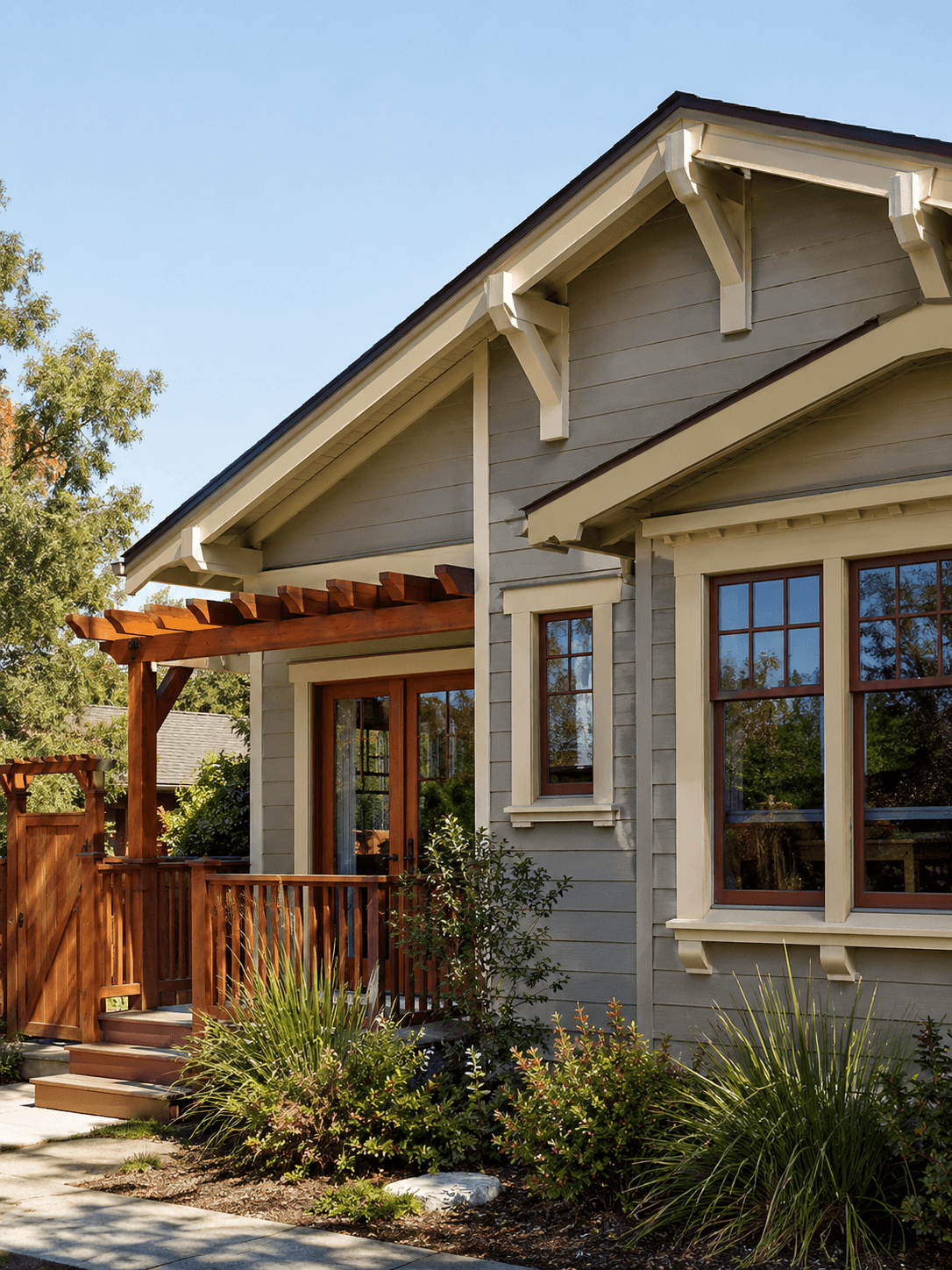
- Roof eaves, fascia boards, rafter tails, roof sheathing, and attic framing
- Window frames, door frames, exterior trim, wall studs, and concealed framing
- Decks, railings, fences, gates, pergolas, and detached wood structures
- Hardwood flooring, built-in cabinetry, furniture, and stored lumber
Signs of Drywood Termites in Your Home
Common signs of drywood termites include hard fecal pellets, tiny holes in wood, discarded wings, indoor swarmers, and wood that has become hollow or weakened. The evidence may appear below or beside the infested area, so the location where a sign is found is not always the exact location of the colony.
Drywood Termite Pellets or Frass
Small Kick-Out Holes
Discarded Wings
Drywood Termite Swarmers
Hollow or Weakened Wood
Exposed Galleries
Drywood termite chambers are sometimes discovered when siding, trim, flooring, or wall coverings are removed. The galleries often cross the wood grain and contain compacted pellets or smooth interior surfaces.
Important Note: New pellets appearing after an area has been cleaned can support a finding of current activity. A lack of new pellets does not rule out termites elsewhere inside the wood.
How Are Drywood Termites Treated?
Drywood termites are treated with either localized methods applied to identified infested wood or whole-structure fumigation. The appropriate method depends on the number of affected areas, their accessibility, and the possibility of additional colonies inside concealed framing.
Localized Drywood Termite Treatment
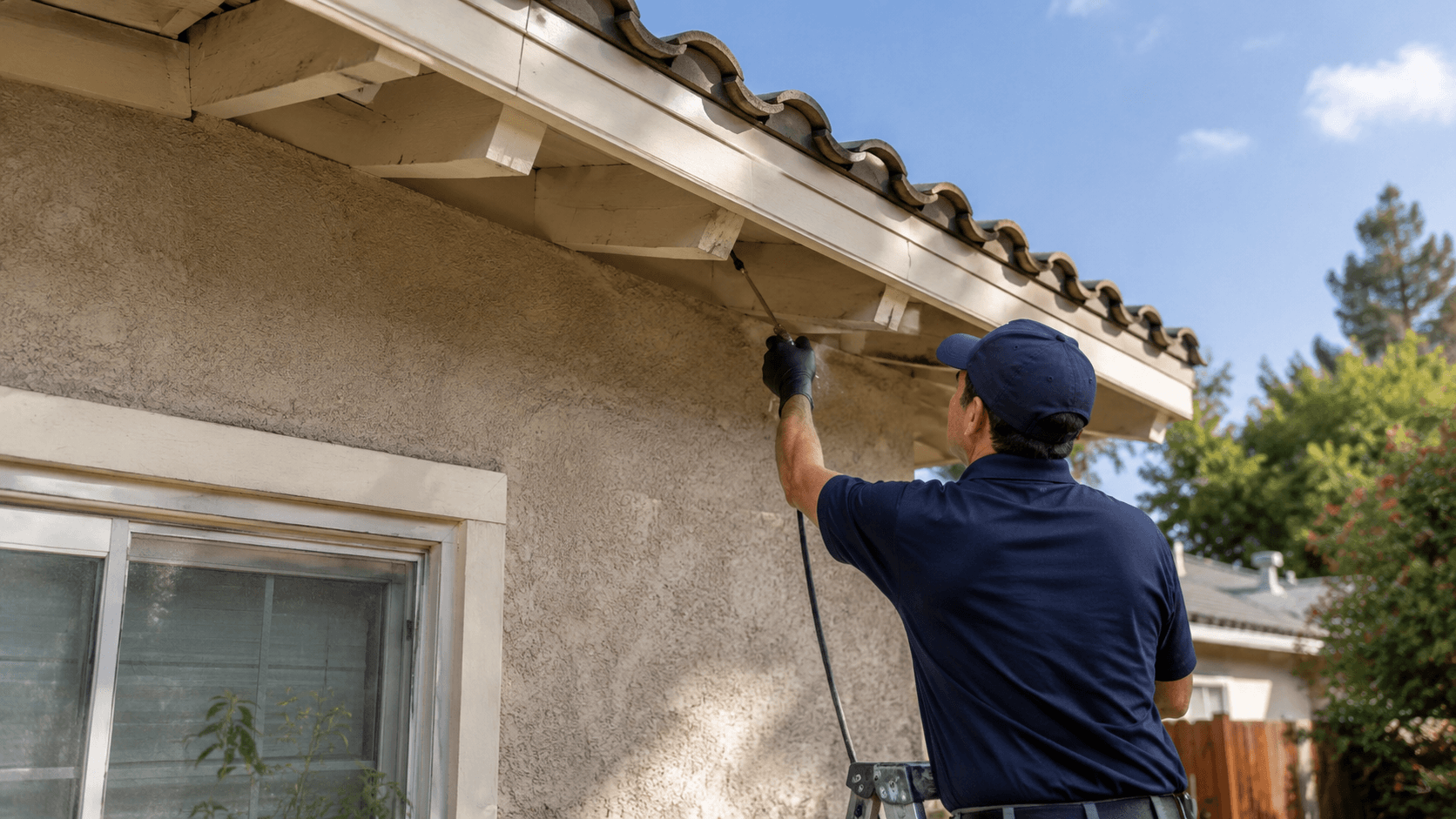
Localized treatment is used when drywood termite activity is limited to one area or a small group of accessible wood members. Small openings may be drilled into the galleries so treatment material can be applied directly to the affected wood. Infested wood may also be removed when the full affected area can be reached.
This method treats only the locations that have been identified. It does not reach colonies concealed in other parts of the structure, so accurate detection and access to the infested wood are essential.
Whole-Structure Fumigation
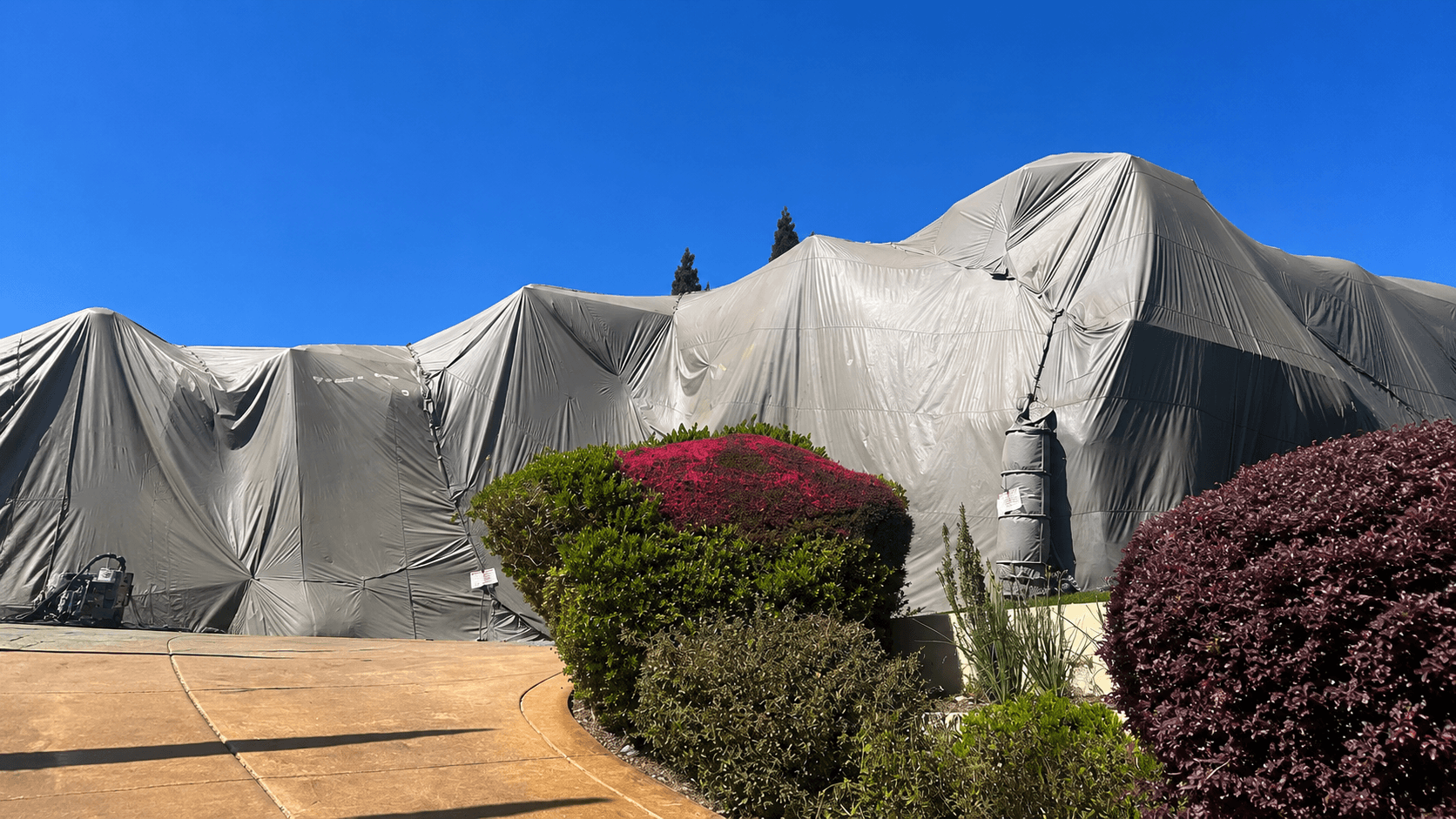
Whole-structure fumigation is used when drywood termite activity appears in several areas, extends into inaccessible framing, or cannot be fully reached with localized treatment. The building is enclosed under tarps, allowing the fumigant to penetrate visible and concealed wood throughout the structure.
Occupants, pets, and plants must leave during fumigation and aeration. The property is tested and cleared by a licensed fumigation professional before anyone returns.
Localized treatment addresses confirmed, reachable colonies. Fumigation treats accessible and hidden drywood termite colonies throughout the enclosed structure.
How to Help Prevent Drywood Termites
Drywood termite prevention focuses on blocking winged termites from entering exposed wood and starting new colonies. These measures can reduce the risk of new infestations, but they will not eliminate termites already living inside the structure.
- Keep exterior wood painted or sealed, paying close attention to eaves, fascia, trim, rafter tails, and exposed wood ends.
- Seal cracks, open joints, and gaps around rooflines, windows, doors, utility openings, and adjoining wood components.
- Install and maintain fine-mesh screens over attic vents and other openings that could admit termite swarmers.
- Repair split, weathered, or deteriorated exterior wood before openings develop into suitable entry points.
- Examine used furniture, stored lumber, and reclaimed wood for pellets, holes, or insect activity before bringing them indoors.
- Remove dead branches, discarded boards, and unused lumber stored against or close to the building.
Preventive maintenance cannot confirm that a property is termite-free. Pellets, discarded wings, swarmers, or unexplained wood damage should be professionally inspected.