Warm, sunny weather after rain can bring hundreds of winged termites into view with little warning. They may gather around a patio, land on exterior walls, appear near a window, or leave piles of wings on the floor.
Termite swarm season in Sacramento is not limited to one part of the year. Western subterranean termites can swarm during spring and after the first autumn rains. Western drywood termites are more likely to swarm during warm daylight hours in summer and fall.
The location of the swarm matters as much as the timing. Termites flying across a yard confirm that a colony is nearby, but they do not automatically mean the house is infested. Swarmers emerging indoors, leaving through wood, or collecting beside the foundation require closer attention.
Termite Swarming Periods in Sacramento
Different termite species swarm under different weather conditions. This is why winged termites may appear in Sacramento during more than one season.
Subterranean Termite Swarms
Western subterranean termites live in colonies below the ground. Their swarmers usually emerge during calm, sunny conditions after the soil has been soaked by rain.
Spring provides these conditions, but large swarms can also occur after the first substantial autumn rains. UC Agriculture and Natural Resources reports that fall swarming can be especially noticeable in parts of the Sacramento Valley. A warm afternoon following rain can cause mature colonies across the same area to release swarmers at nearly the same time.
Subterranean termite activity is not limited to the day of the swarm. The workers remain underground and continue traveling between the colony and available wood through the soil or enclosed mud tubes.
Drywood Termite Swarms
Western drywood termites generally swarm during warm daytime conditions in summer and fall. They live entirely inside wood and do not need contact with the soil.
Drywood termite swarmers may emerge from eaves, fascia boards, attic framing, exterior trim, siding, decks, or other infested wood. A small swarm from one section of a house can be easy to miss, especially when the insects disperse quickly.
The date alone cannot confirm the termite species. The insects, surrounding evidence, and location where they emerged must also be examined.
What Happens During a Termite Swarm
A termite swarm occurs when a mature colony releases winged reproductive termites called alates or swarmers. These termites leave their original colony to find mates and establish new colonies.
Swarmers may appear in a concentrated burst and then disappear within a short period. Many are eaten by birds, trapped in spider webs, exposed to dry conditions, or unable to find a suitable place to begin a colony. The surviving termites land, shed their wings, pair up, and search for a protected location.
The workers responsible for feeding on wood do not join the swarm. They remain inside the soil, mud tubes, or infested wood. Killing the visible swarmers therefore does not remove the colony that produced them.
A swarm also means the original colony has been present long enough to reach reproductive maturity. It does not show how much wood has been affected or where all of the active areas are located.
The Location of the Swarm Matters
A large outdoor swarm can look alarming, but the number of insects does not establish that they came from the house. The more useful clue is where they appeared.
Swarmers Inside the House
Winged termites found inside a closed building may have emerged through flooring, baseboards, wall openings, window frames, attic wood, or another concealed area. They often move toward windows because they are attracted to light, so the place where they collect may not be the actual exit point.
Indoor swarmers should be professionally inspected, particularly when doors and windows were closed before the insects appeared. Finding matching piles of discarded wings inside provides another reason to check the structure.
Swarmers Beside the Foundation
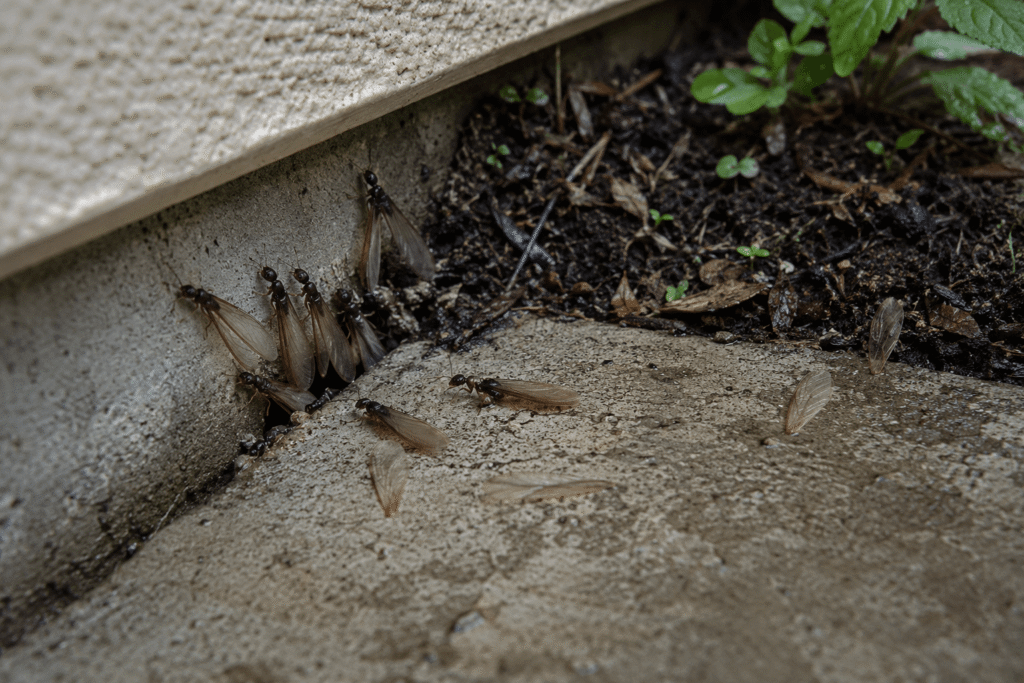
Termites emerging directly beside a foundation, crawlspace opening, porch support, or attached wood component may be connected to activity near the structure. Look for mud tubes, soil inside damaged wood, or wings caught around the same area.
The visible emergence point still may not be the only place termites are reaching the building. Subterranean workers can forage through several routes from the same underground colony.
Swarmers in the Yard
Termites naturally live in soil, old roots, buried lumber, tree stumps, and other cellulose material. A swarm from the far end of a yard does not prove that termites have entered the house.
Activity becomes more concerning when the swarm is close to the foundation or the property also has wood touching soil, plumbing leaks, damp crawlspace conditions, buried construction debris, or visible mud tubes.
Signs Left Behind After a Termite Swarm
The flying insects may be gone by the time you examine the area. Several pieces of evidence can help establish what happened.
Discarded Wings
Termite swarmers shed their wings after landing. You may find small piles near windowsills, sliding doors, baseboards, vents, light fixtures, attic access points, or exterior walls.
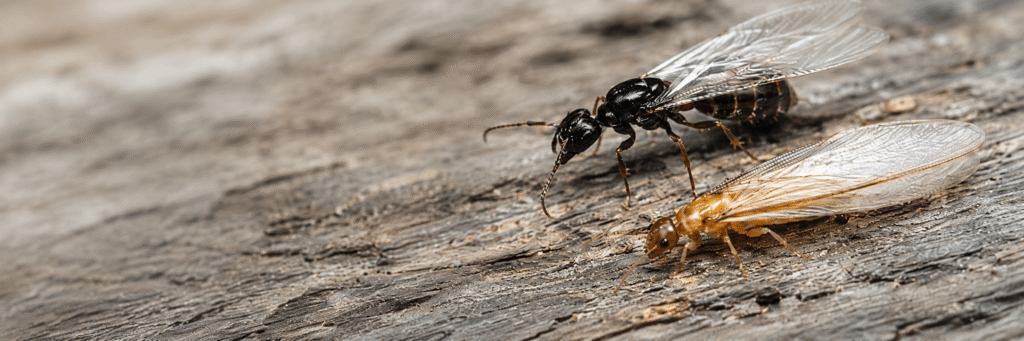
All four termite wings are similar in length. Ants have front wings that are noticeably longer than their rear wings.
Emergence Openings
Drywood termite swarmers may leave through small openings in infested wood. An opening near pellets, damaged wood, or discarded wings deserves inspection. Sealing the hole does not remove the colony inside.
Subterranean termites may emerge through cracks, construction joints, utility penetrations, flooring gaps, or openings connected to their protected travel routes.
Mud Tubes
Subterranean termites construct narrow tubes from soil, saliva, and wood particles. These can appear along foundations, concrete walls, crawlspace supports, plumbing lines, or other surfaces between the soil and structural wood.
An empty section of tube does not prove that activity has ended. Termites may have moved to another route.
Drywood Termite Pellets
Small, hard pellets beneath wood can indicate drywood termite activity. The pellets are usually similar in size but may vary in color depending on the wood being consumed.
Pellets confirm that drywood termites have occupied the wood. They do not establish current activity or reveal the complete size of the infestation.
Termite Swarmers and Flying Ants Look Different
Flying ants and termite swarmers can appear under similar conditions, and both may gather around windows or outdoor lights.
Termite swarmers have straight antennae, a broad body without a narrow waist, and two pairs of wings that are close to equal in length. Flying ants have bent antennae, a pinched waist, and front wings longer than their rear wings.
Do not rely on color alone. Termite swarmers can be dark brown or black, which makes them easy to mistake for ants. A close photograph or saved specimen can make identification easier.
Our guide to flying ants vs. termites provides a more detailed comparison of their wings, bodies, antennae, and behavior.
What to Do After Finding Termite Swarmers
A few simple steps can preserve useful evidence and help an inspector identify what you found:
- Take close photographs of the insects, wings, and the exact area where they appeared.
- Save several insects or loose wings in a sealed container or plastic bag.
- Record whether the swarm occurred indoors or outside, along with the approximate time and recent weather.
- Check the nearby foundation, wood, baseboards, windows, and crawlspace access for mud tubes, pellets, openings, or damaged material.
- Vacuum the remaining insects after documenting the area and discard the vacuum contents outside.
- Arrange a termite inspection when swarmers emerged indoors, directly from the structure, or beside the foundation.
Avoid spraying the emergence point before it has been inspected. Household insect spray may kill exposed swarmers, but it will not reach the colony inside the soil or wood. It can also make the original exit area harder to identify.
Do not pull apart walls, trim, or structural wood to search for the colony. Termite activity can extend beyond the first visible opening, and unnecessary disturbance may damage material that an inspector needs to examine.
What a Termite Inspection Can Confirm
A professional termite inspection can determine whether the insects are termites, identify the termite type, examine the emergence area, and look for additional evidence around the property.
The inspection findings are also needed before discussing treatment. Subterranean termites are commonly addressed through soil treatment, bait stations, or treatment of accessible activity. Drywood termites may require localized treatment or whole-structure fumigation, depending on the number and accessibility of the affected areas.
Seeing a swarm does not automatically mean the entire house requires treatment. The treatment scope should be based on confirmed activity, the termite species, construction conditions, and the locations that can be reached.
Frequently Asked Questions
The visible swarm is usually brief and may end within the same day. Finding no flying termites later does not mean the original colony has disappeared. Workers remain inside the soil or wood after the swarm ends.
Rain does not create a termite infestation. Moist soil, warm temperatures, sunlight, and calm air can trigger a mature subterranean termite colony to release swarmers. This is why several colonies may swarm shortly after the same Sacramento rain event.
The western subterranean and western drywood termites commonly found in Northern California generally swarm during daylight hours. The time of day can help with identification, but the insects and surrounding evidence should still be examined.
The winged swarmers are reproductive termites, not the workers responsible for most feeding damage. Their presence can reveal a mature colony nearby or inside the structure. A surviving pair may also begin a new colony after finding suitable conditions.
Termite swarmers deliberately shed their wings after landing. The insects may have moved into a crack, died, or been removed by predators while the lightweight wings remained behind. Indoor piles of matching wings should be inspected even when no live termites are visible.
Found Swarmers or Discarded Wings? Request a termite inspection to identify the insects, examine where they appeared, and check the property for signs of drywood or subterranean termite activity.